
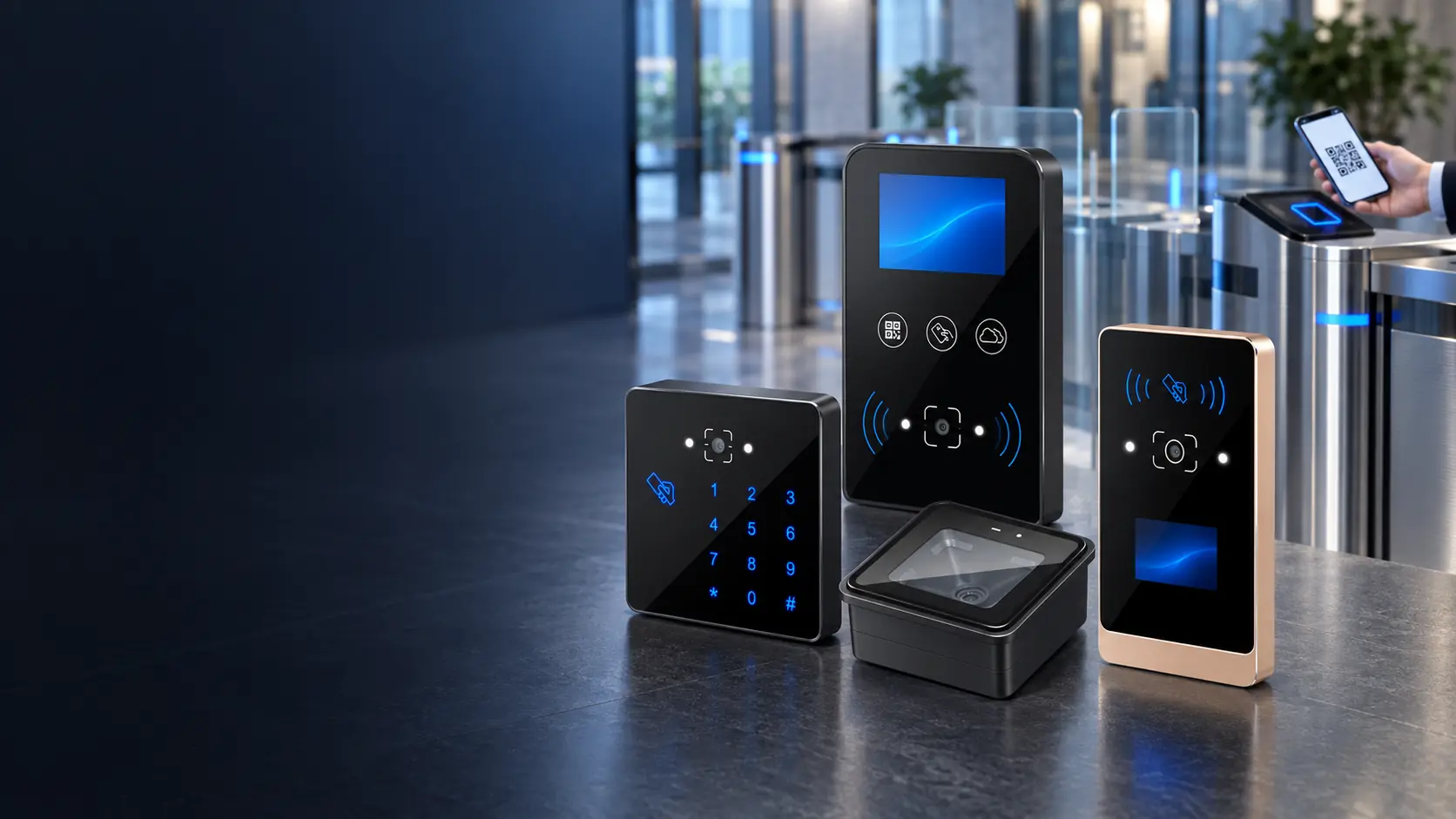
QR Code Access Control Terminal Manufacturer for Integrated Entry Systems
Connect QR entry to the platform you already run. Cyberoce terminals combine code recognition, network communication and relay control for compatible doors and turnstiles. Compare display, wall-mounted and embedded formats, then validate the selected configuration with your credentials and access equipment.
- Wall-mounted, display and embedded terminal formats
- Ethernet with optional Wi-Fi or Cat-1 4G by model
- Online and offline verification with local record storage on selected models
- Relay control, API documentation and OEM/ODM support by project
Find the Terminal That Fits Your Entrance
Start with the space available at the entry point, the feedback users need, the network on site and the equipment the terminal must control. These models offer different starting points for the same QR access architecture.
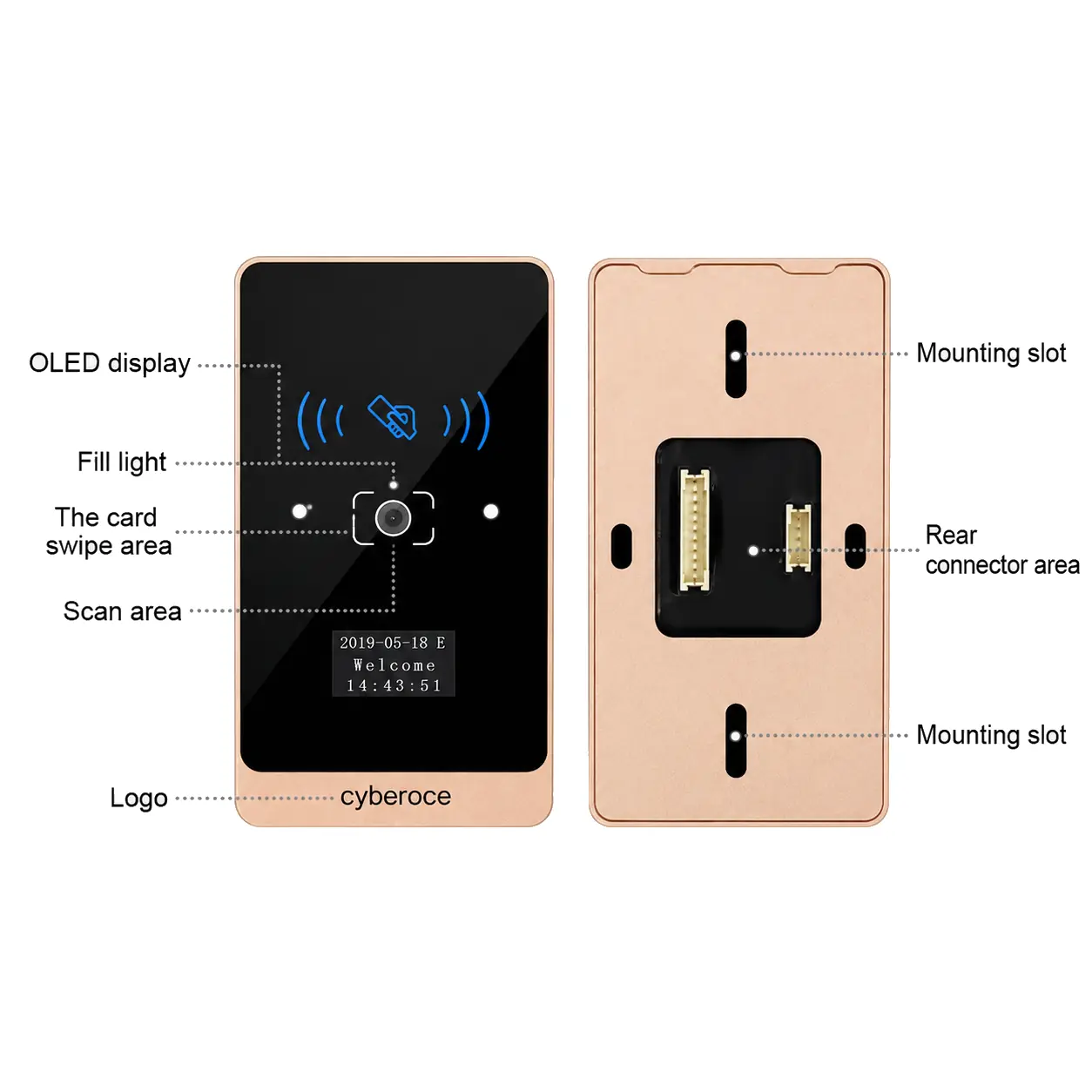
Slim Metal QR Code Access Control Terminal
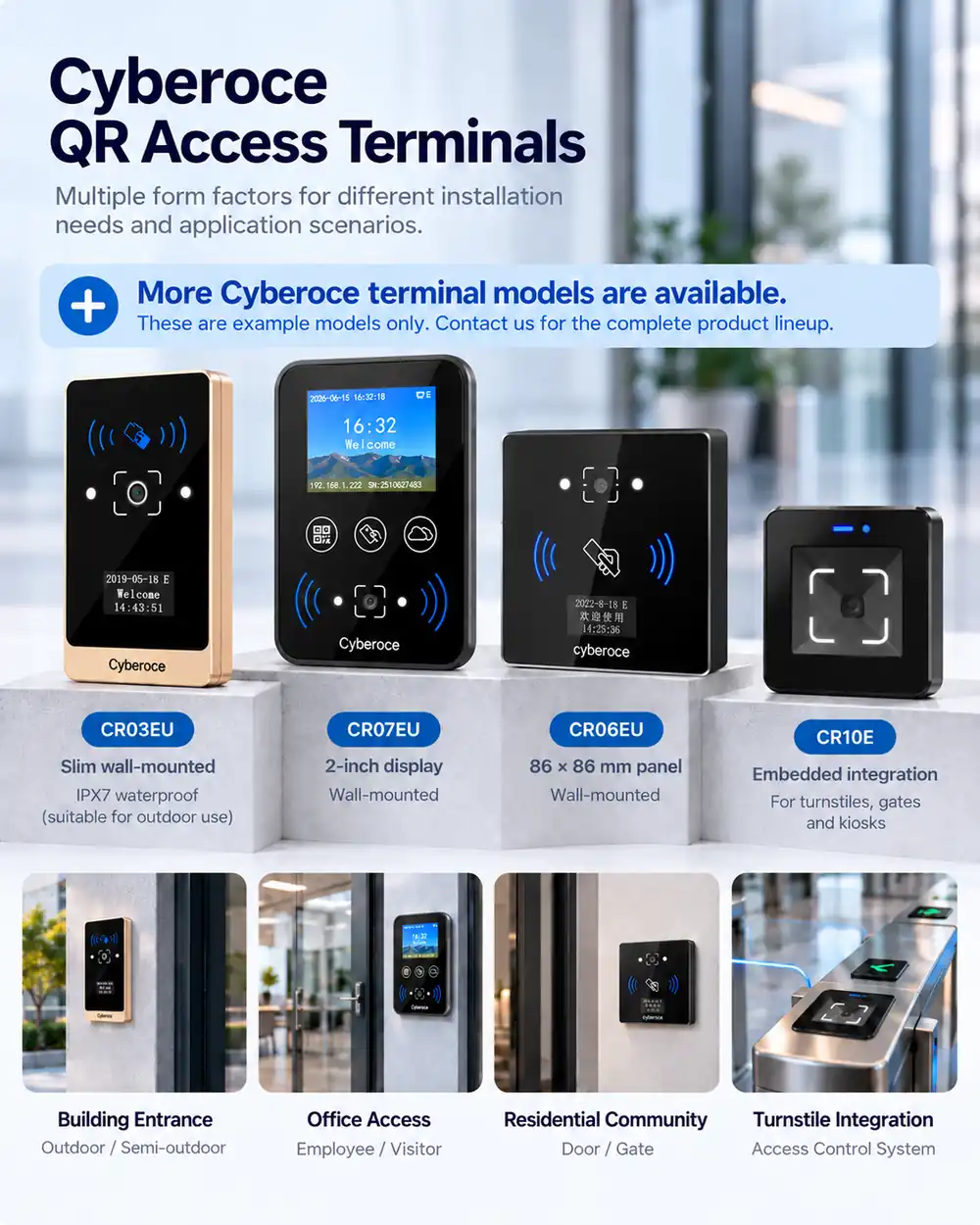
A slim metal housing with a 0.96-inch status display, Ethernet communication and relay output. Consider it where the mounting surface is narrow and a separate access controller is not part of the intended design.
Discuss CR03EU Fit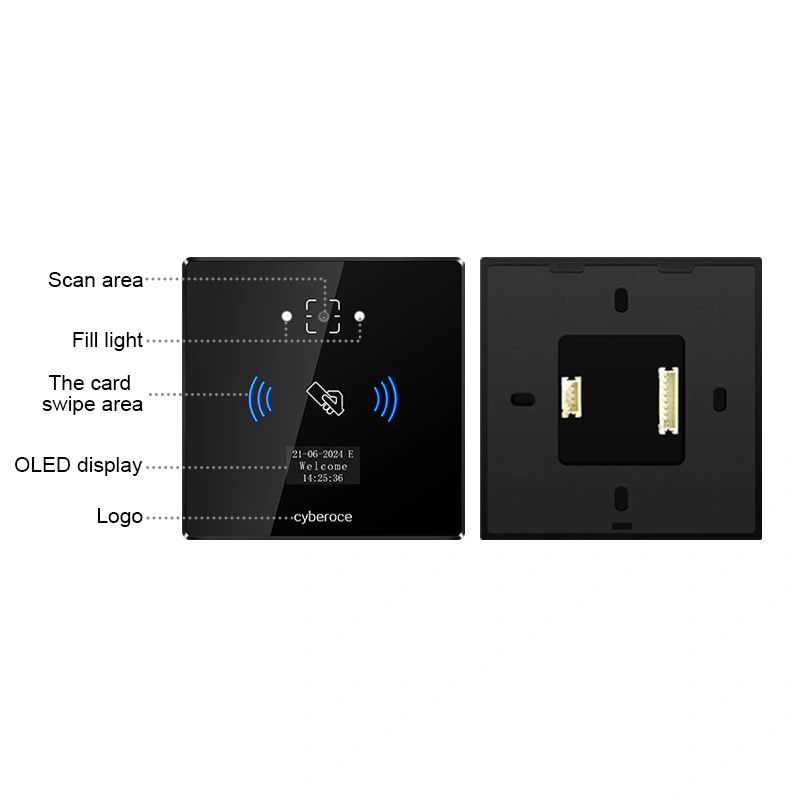
Square QR & RFID Access Control Terminal
An 86 × 86 mm terminal for QR or barcode credentials and 13.56 MHz MIFARE cards. It has a compact status display, Ethernet and an optional Wi-Fi configuration. Match its panel space and credential mix to the entrance.
Discuss CR06EU Configuration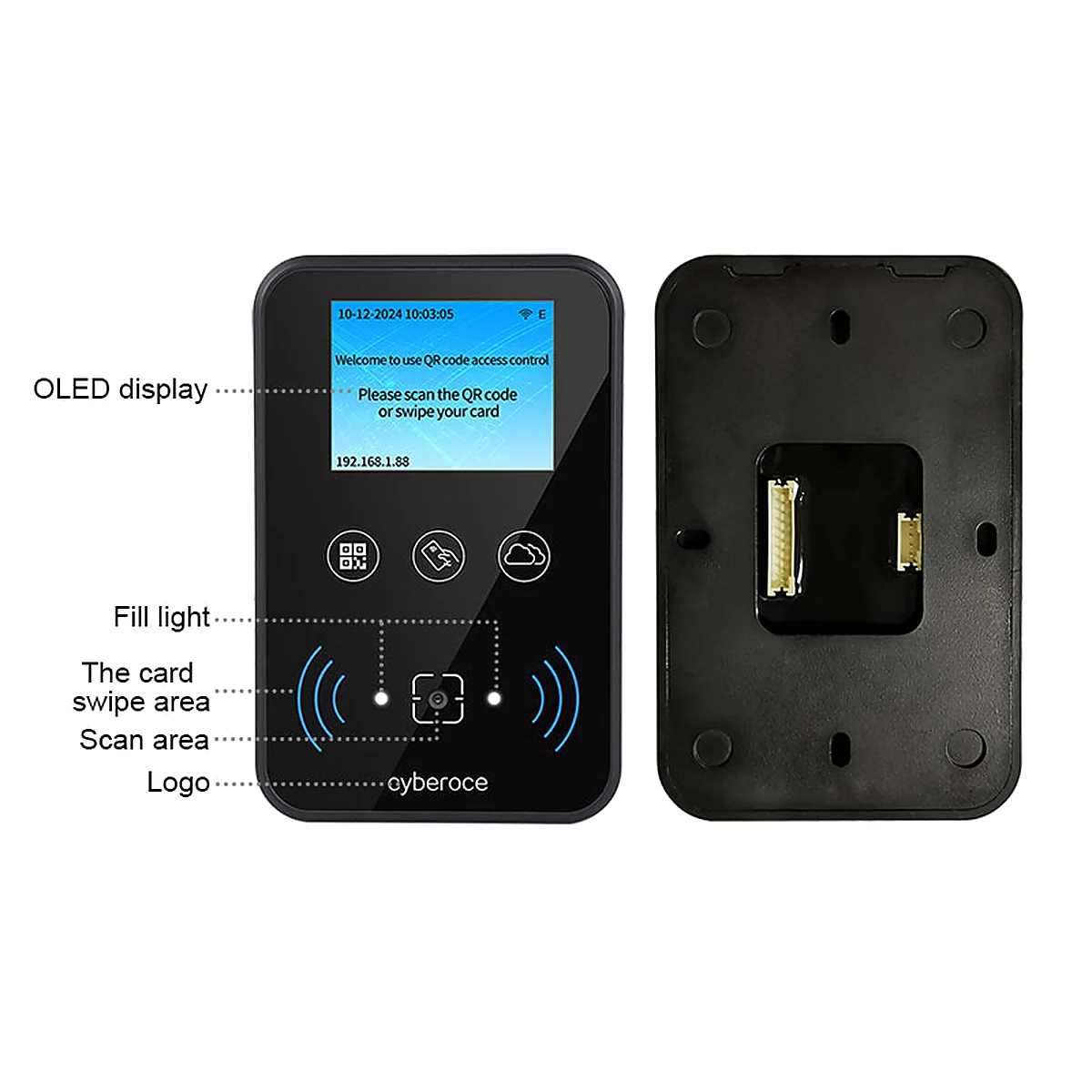
Display QR Code Access Control Terminal
A 2-inch IPS display and voice prompts help people identify the result of a scan at a busy entrance. The documented CR07EUP configuration supports Ethernet, optional Wi-Fi and project-specific screen backgrounds or audio prompts.
Discuss the CR07 Series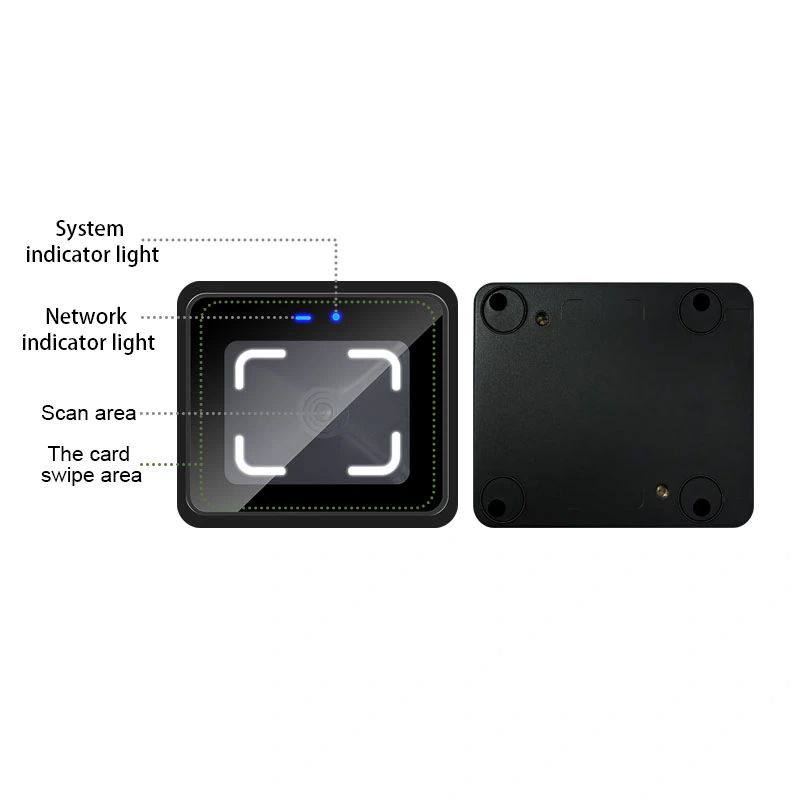
Embedded QR Code Access Control Terminal
A screen-free, compact terminal for integration into a turnstile, elevator panel or other access equipment. Check the opening, installation depth, power and relay connection against the actual enclosure.
Review CR10E Integration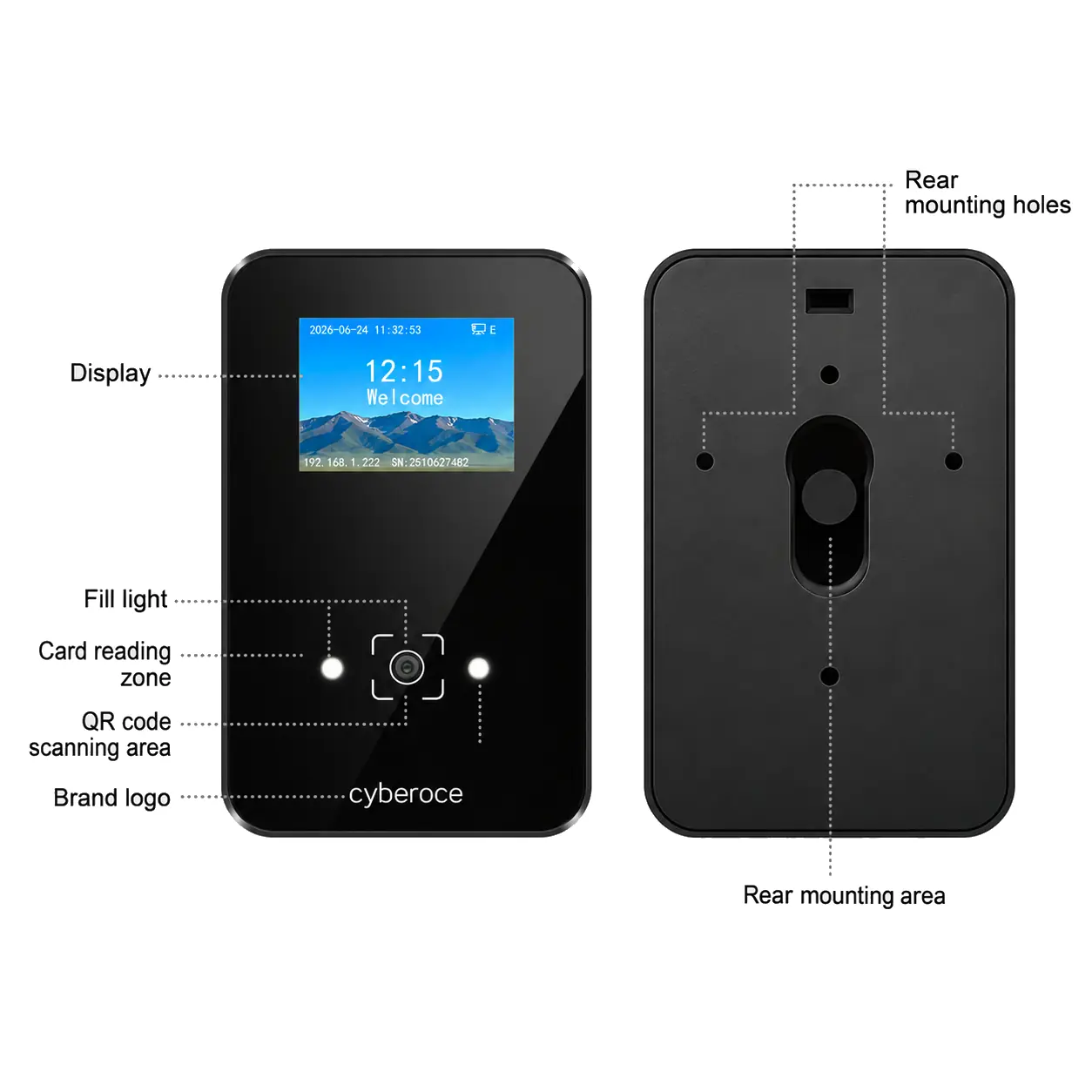
4G QR Code Access Control Terminal
The documented CR09EUP design combines a 2-inch display with Ethernet and optional Cat-1 4G communication. Discuss the exact modem configuration, local frequency bands and platform connection for sites where wired networking is limited.
Discuss a 4G Configuration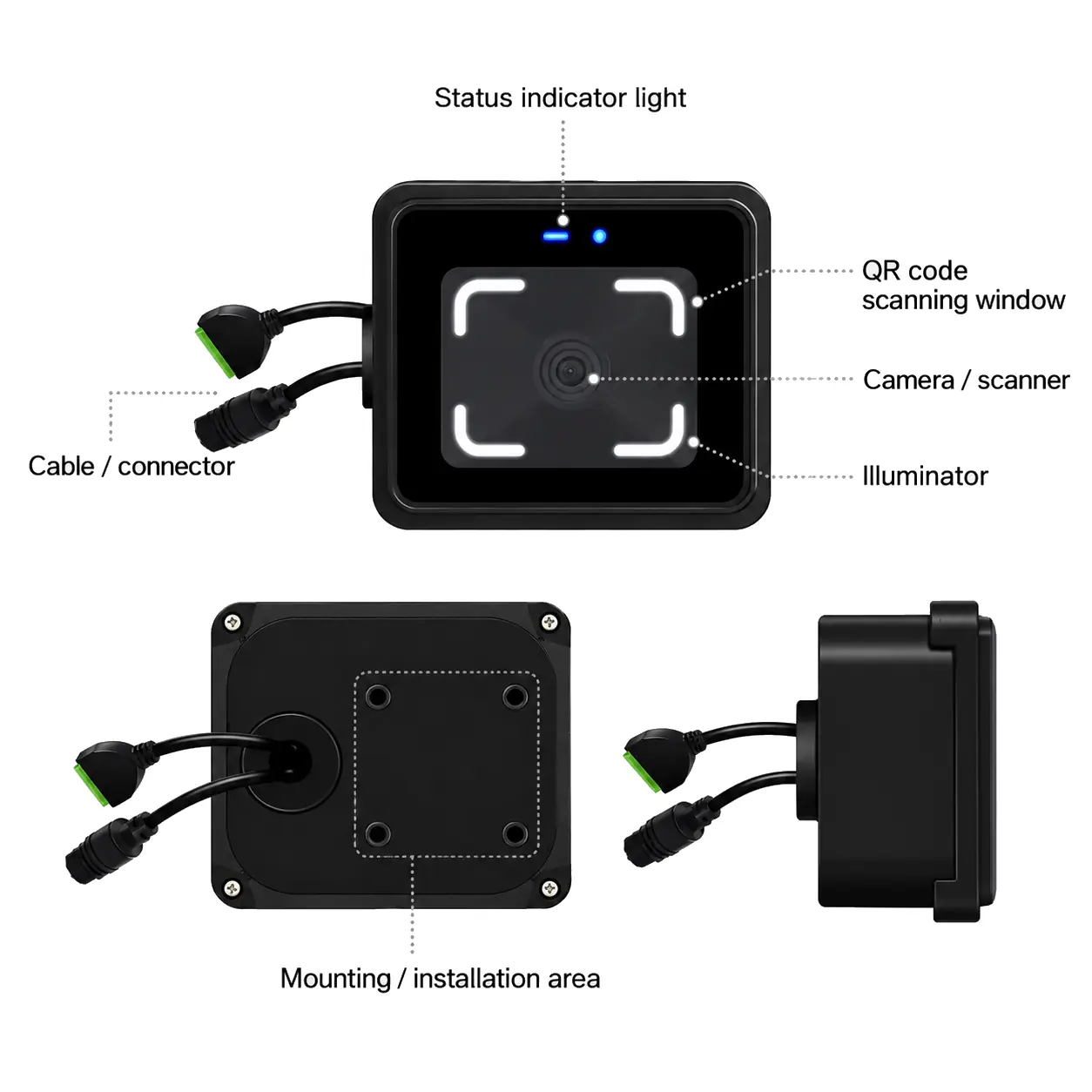
IP66 Embedded QR Code Access Control Terminal
A 76 × 66 mm screen-free format with an IP66 rating in its specification. CR20E is documented with Ethernet; CR20EW adds 2.4 GHz Wi-Fi. Review the opening, enclosure and connection method for the intended equipment.
Review CR20E FitWireless options, model suffixes and installation details must be matched to the exact configuration before ordering.
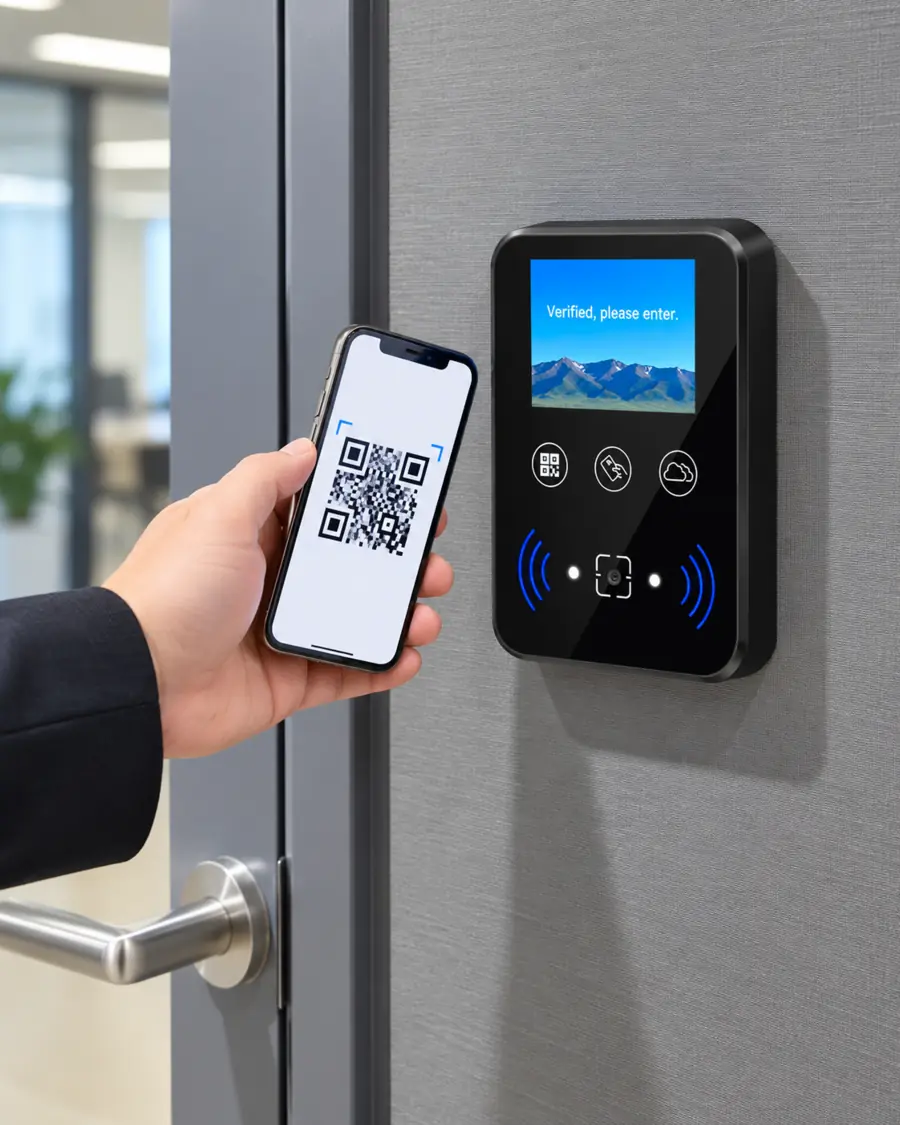
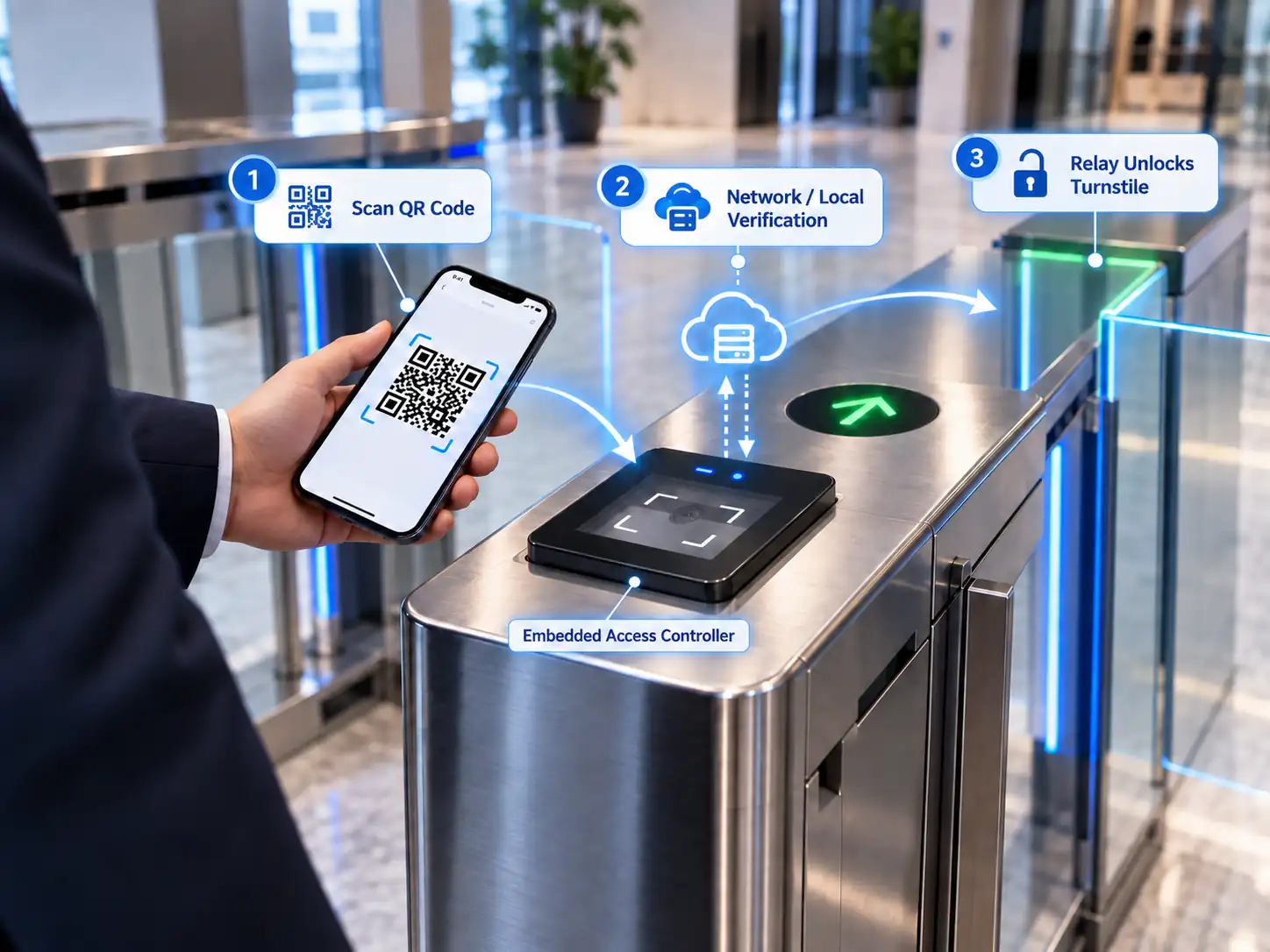
Illustrative verification path: QR code or supported RFID card → terminal → online server verification or local whitelist → relay → compatible lock or turnstile. Network, exit button and door contact connections depend on the project.
One Terminal at the Entry Point, Connected to Your Access Rules
A visitor presents a QR code on a phone or printed pass. The terminal reads the credential and follows the configured online verification path or a locally provisioned whitelist. When access is approved, its relay can signal a compatible lock or turnstile. The host platform defines who may enter, when a pass expires and how an event is recorded.
When an existing platform needs an entry device
HTTP, HTTPS and MQTT are listed for multiple terminal models, and API documentation is available for project integration. Test the actual credential payload, response logic and relay behavior with your platform before deployment.
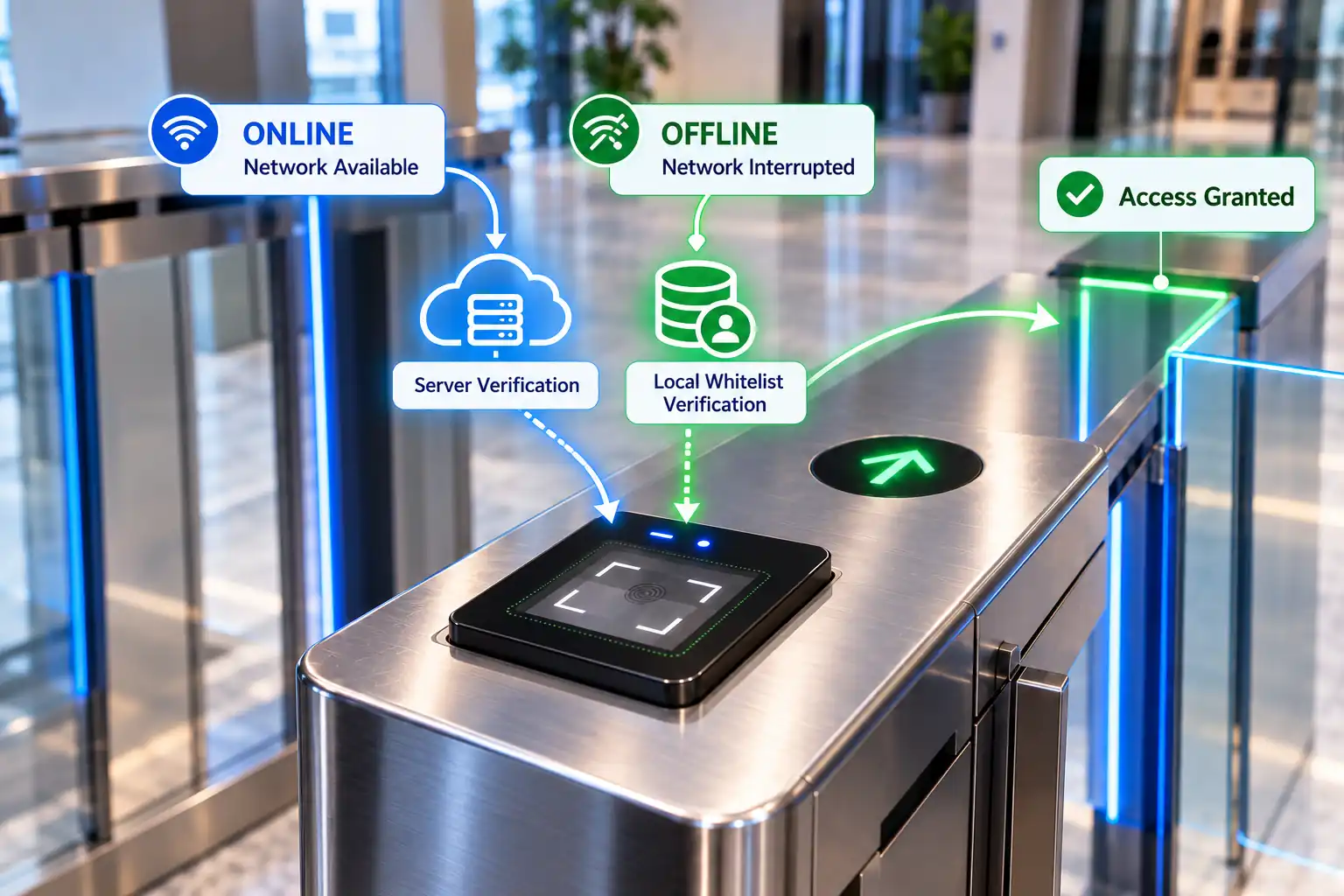
When the network is interrupted
Selected models support local verification and record caching. Offline access depends on the permissions already delivered to the device, so whitelist updates, record synchronization and recovery behavior belong in the sample test.
When the entrance hardware is already chosen
A built-in relay can control compatible access equipment, but the electrical load, contact rating and gate-control input must be matched to the selected model and wiring plan.
Compare the Documented Terminal Formats
Use the dimensions to narrow the mounting choice, then check the exact drawing and order suffix before making an opening or fixing the network design.
Swipe to view full table →
| Model | Dimensions | User feedback | Network starting point |
|---|---|---|---|
| CR03EU | 108.8 × 63.8 × 12.65 mm | 0.96-inch OLED display | Ethernet |
| CR06EU | 86 × 86 × 16.5 mm | 0.96-inch status display | Ethernet; Wi-Fi option |
| CR07EUP | 115 × 75 × 15.5 mm | 2-inch IPS display and voice prompts | Ethernet; Wi-Fi option |
| CR10E | 76 × 66 × 33 mm | Screen-free indicator format | Ethernet |
| CR09EUP | 131.2 × 82 × 24.1 mm | 2-inch IPS display and voice prompts | Ethernet; optional Wi-Fi or Cat-1 4G |
| CR20E / CR20EW | 76 × 66 × 35.4 mm | Screen-free indicator format | Ethernet; CR20EW adds 2.4 GHz Wi-Fi |
For exposed installations, compare the complete environmental requirement rather than treating ratings as interchangeable. The CR03EU, CR06EU and CR07EUP specifications list IPX7; the CR20E series specification lists IP66. No ingress-protection rating is stated for CR10E. Review mounting and the exact model documentation before choosing an outdoor position.
Built Around Integration Decisions
QR, barcode and card entry in one range
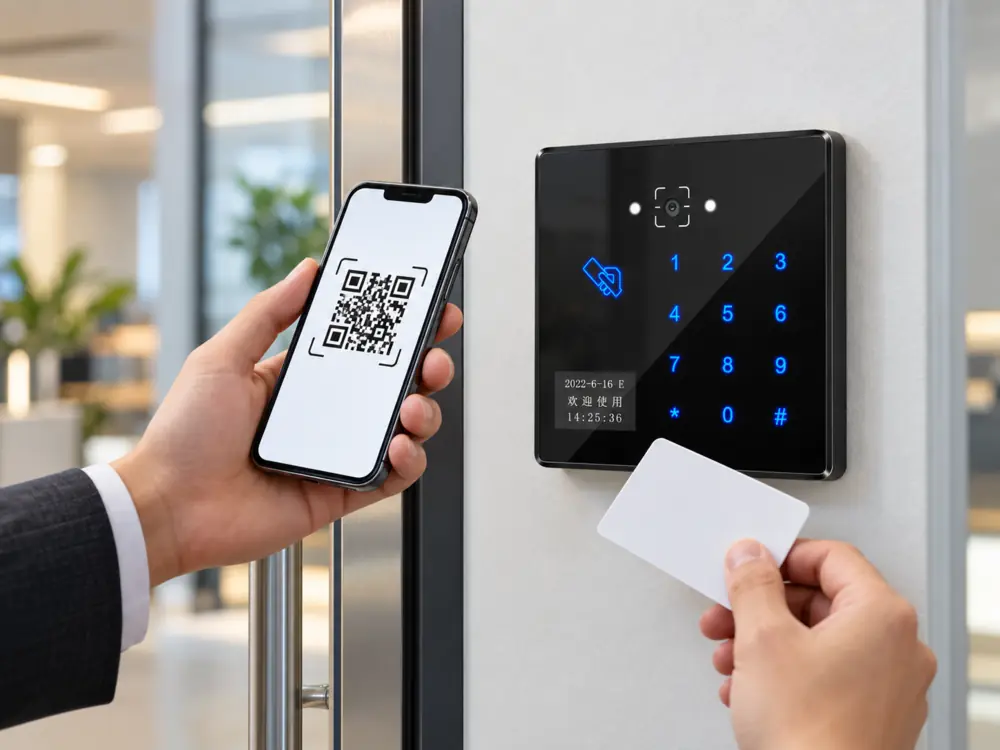
Mobile-screen and printed QR credentials can be evaluated alongside supported 13.56 MHz MIFARE cards. This lets a project plan temporary passes and recurring card access together, with the credential set checked at model level.
Network and relay functions in the terminal
The terminal range combines code reading, network communication, local data and relay output. For an entry designed around device-side control, this can reduce the need for a separate front-end reader and controller; the final electrical and system architecture still needs review.
Online and offline verification paths
Local whitelist verification provides a defined path for selected entries when a connection drops. Access rules, offline duration, record handling and recovery should be tested against the host platform rather than assumed from the QR code alone.
OEM details and device-side configuration
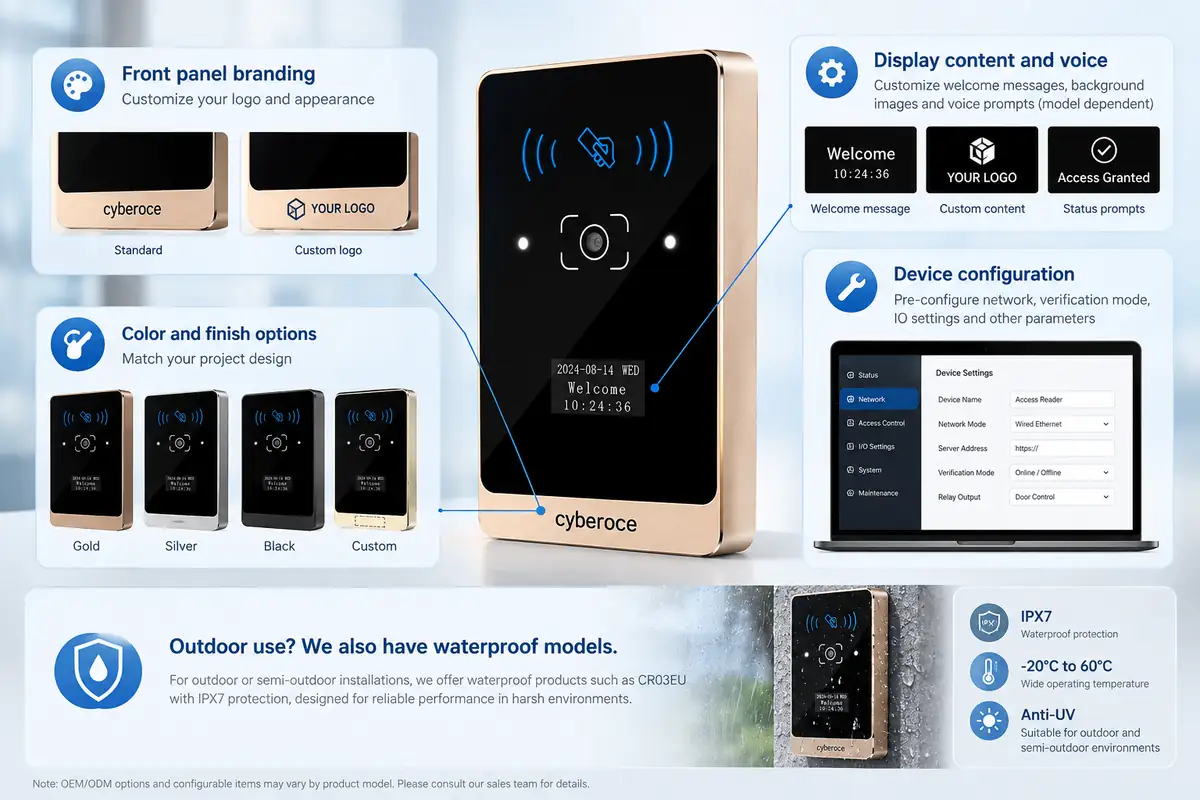
Project work can cover front-panel branding, labels, display backgrounds, voice prompts and device settings. Interface or hardware changes are reviewed against the selected model before the production configuration is fixed.
Choose by the Entry Point
Offices and shared buildings: CR03EU or CR06EU can pair QR access with supported card credentials at a door-side position. Select the panel format, network connection and lock interface together.
Gyms and self-service spaces: The CR07 series adds a larger screen and voice feedback where people need a clear scan result without an attendant.
Turnstiles and equipment panels: CR10E is a compact embedded starting point; compare CR20E or CR20EW when the project also calls for the documented IP66 configuration.
Sites with limited wired networking: A CR09 series configuration with optional Cat-1 4G may suit the network plan. Validate regional bands, coverage and the server connection during evaluation.
For ticket or visitor entry, the connected platform remains responsible for issuing credentials and applying access rules; the selected terminal performs the configured verification and entrance-control role.
Product Documents and Project Validation
Cyberoce develops QR access hardware in Shenzhen. Its ISO 9001:2015 quality management certificate covers the research, development and sales of intelligent access control systems. The available CE-RED and UKCA-RED compliance documents identify CR06EU and CR06EUW specifically; other models and markets require their own document review.
Integration work starts more reliably with the real materials used at the entrance. Cyberoce can review sample QR codes and barcodes, the intended network path and the lock or gate signal with a selected sample unit. Project configuration may then cover the display, voice, labels and device-side settings agreed for that installation.
Discuss Sample Validation


QR Access Terminal Buyer Guide
Select a topic below to review integration answers and architectural comparisons for Cyberoce terminals.
What makes up a QR entry point?
Can the terminal connect to existing visitor management software?
What happens when the network goes down?
How does QR entry compare with card access?
What should be checked for one-time or time-limited QR access?
Which format suits an office or residential entrance?
Continue with the Right Access Architecture
Compare the wider reader and terminal range.
Choose this path when an existing controller makes the access decision.
Review controller-connected embedded hardware for turnstiles and equipment.
Review company background and relevant supplier information.
Plan Your QR Terminal Integration
Share the entrance equipment, credential format and platform connection you need. We can compare the documented models and identify what should be validated with a sample before a production configuration is agreed.
Helpful details include:
- Door, turnstile, elevator or other entrance equipment
- Mobile QR, printed QR or barcode, and RFID credential requirements
- Ethernet, optional Wi-Fi or Cat-1 4G needs, depending on the selected model
- HTTP, HTTPS or MQTT platform connection and online or offline verification workflow
- Relay connection for the lock or gate, plus exit button or door sensor inputs
- Preferred model, quantity, sample validation and OEM / ODM scope